Marcia
 Let’s be honest about something that most people feel but rarely say out loud.
There are moments in life when you look around at the plans you’ve been making — the trips you’ve been putting off until someone else’s schedule aligns with yours, the destinations you’ve been researching for years while waiting for the right travel companion, the experiences you keep deferring because the timing is never quite perfect for everyone involved — and you realize something quietly uncomfortable.
You’ve been waiting a long time. And the waiting hasn’t been serving you.
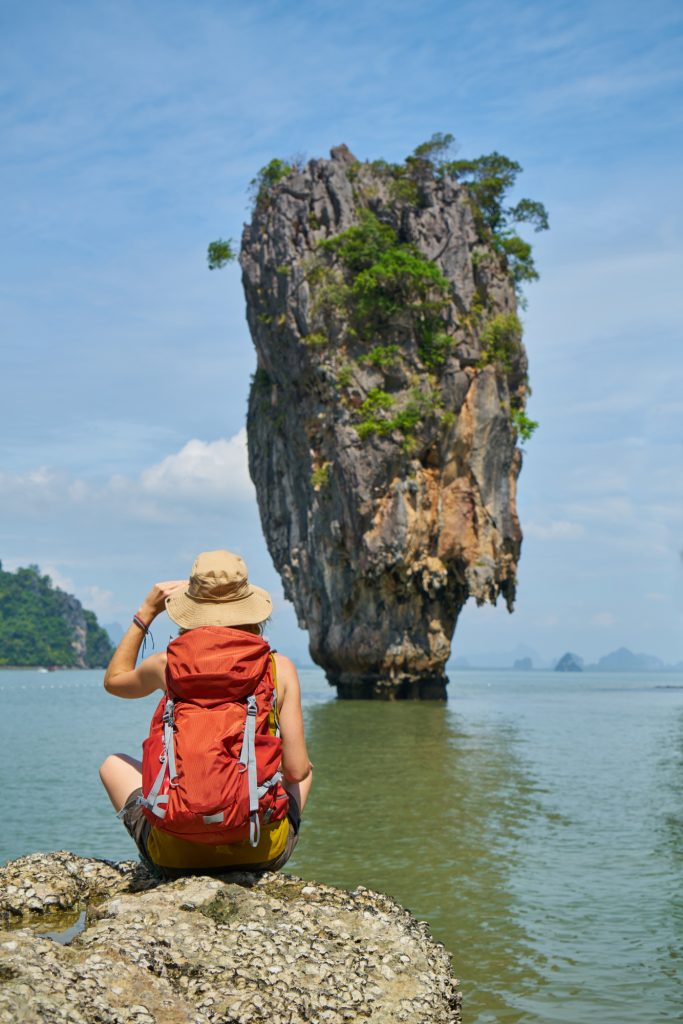
Solo travel is the decision that ends the waiting. Not because it’s the easy choice — it usually isn’t, at least not the first time. But because it’s the choice that puts you in the driver’s seat of an experience that is entirely, unapologetically yours. And what comes from that — what solo travel actually does to the people who commit to it — is something that’s genuinely difficult to fully appreciate until you’ve experienced it yourself.

The Freedom That Changes Everything
Here’s the thing about traveling with other people that nobody talks about directly enough.
It’s wonderful in many ways. Shared experiences, shared memories, the specific pleasure of seeing something remarkable with someone you care about — these are real and meaningful parts of travel.
But traveling with other people also means constant negotiation. Where to eat, when to wake up, which museum is worth the time, whether the afternoon is better spent at the beach or the market. Small negotiations, mostly. But negotiations nonetheless — a continuous process of aligning preferences and schedules and energy levels that shapes every day of the trip in ways you barely notice because you’re so used to it.
Solo travel removes all of that. When you wake up in a new city with nowhere specific to be and no one else’s preferences to factor in, the day opens up in a way that feels almost disorienting the first time it happens. You can spend three hours in a café because the light is good and the coffee is excellent and you’re reading something you don’t want to put down. You can change plans entirely at noon because you heard about something more interesting. You can eat when you’re hungry, sleep when you’re tired, and move at a pace that is calibrated entirely to what you actually need rather than what the group consensus requires.
This freedom sounds simple. What it produces is not simple at all. It produces a travel experience that is more personal, more responsive to what you’re actually drawn to, and more genuinely revealing of the places you’re visiting than almost any group travel experience can match.
What You Learn About Yourself
This is the part of the solo travel conversation that people who haven’t done it tend to receive with mild skepticism. Yes, yes — you find yourself. People say that about lots of things.
But here’s what actually happens, stated as practically as possible.
When you travel alone, you make every decision yourself. Every small one and every large one. Where to stay, how to get there, what to do when the plan falls apart, how to ask for help in a place where you don’t speak the language well, how to sit with uncertainty when things don’t go the way you expected and figure out what to do next.
These decisions, accumulated across days and weeks of solo travel, build something real. A particular kind of confidence that comes specifically from having navigated unfamiliar situations independently and discovered — often to your own surprise — that you are more capable than you gave yourself credit for. That you can figure things out. That you can be alone in a foreign place and not just survive it but genuinely enjoy it.
People who travel solo regularly describe it as one of the most reliable ways they know to reset their understanding of what they’re actually capable of. Not in an abstract motivational sense — but in a very concrete, experiential sense. You did the thing. By yourself. And it worked.
The Connections That Happen When You Travel Alone
Here’s the paradox that surprises almost every first-time solo traveler.
You expect to feel lonely. You might, occasionally. But what you don’t expect is how much more open to connection you become when you’re traveling alone compared to when you’re traveling with a group.
When you’re with people you already know, the social need is already met. You have your companions. The conversations and connections that might otherwise happen — with locals, with other travelers, with people you meet in circumstances that would never arise in your regular life — simply don’t happen as often because the social space is already filled.
Traveling alone creates openings. You talk to people more because you’re the only one at your table. You accept invitations you might otherwise decline. You find yourself in conversations and situations and friendships that exist precisely because you were alone and therefore available in a way that group travelers rarely are.
Some of the most meaningful human connections that people describe in their lives happened during solo travel. Not despite the solitude — because of it.
The Practical Reality of Going Alone
Solo travel sounds romantic and liberating — because it is. It’s also a practical undertaking that benefits from honest preparation.
Safety awareness matters more when you’re traveling alone simply because you don’t have a travel companion to share the responsibility of staying oriented and aware. This doesn’t mean traveling in fear — it means making smart decisions about accommodation, being thoughtful about the areas you explore and when, and having a communication plan that keeps someone at home aware of your general whereabouts.
Planning matters more than people expect on their first solo trip. Not over-planning — leaving no room for spontaneity is its own mistake — but having the logistical foundation well enough sorted that you’re not spending your first day in a new country stressed about things that could have been arranged in advance. Accommodation booked. Transportation from the airport confirmed. A general sense of the area you’re staying in and what’s accessible from it.
Working with an experienced travel planner for the foundational elements of a solo trip — flights, accommodation, transfers, and the logistical backbone that everything else hangs from — is one of the most underrated decisions a first-time solo traveler can make. It frees you to focus on the experience itself rather than the logistics surrounding it.
The Thing That Stays With You
People who travel solo describe it in ways that suggest it leaves a mark that other travel experiences don’t quite match.
Not always the big dramatic moments — though those happen too. More often it’s the small ones. The morning you woke up in a city you’d never been to, with nothing specific required of you, and felt something that was genuinely difficult to name but that had something to do with freedom and possibility and the particular pleasure of being fully present in an experience that was entirely yours.
That feeling doesn’t fully translate when you try to describe it to someone who hasn’t felt it. But it stays with you in a way that shapes how you think about travel — and honestly, how you think about yourself — long after you’ve come home.